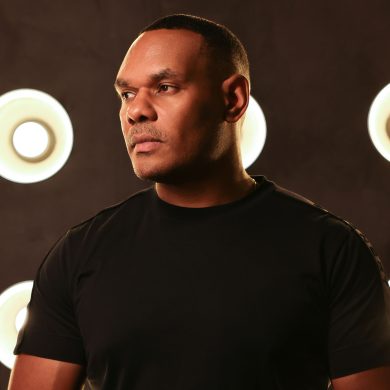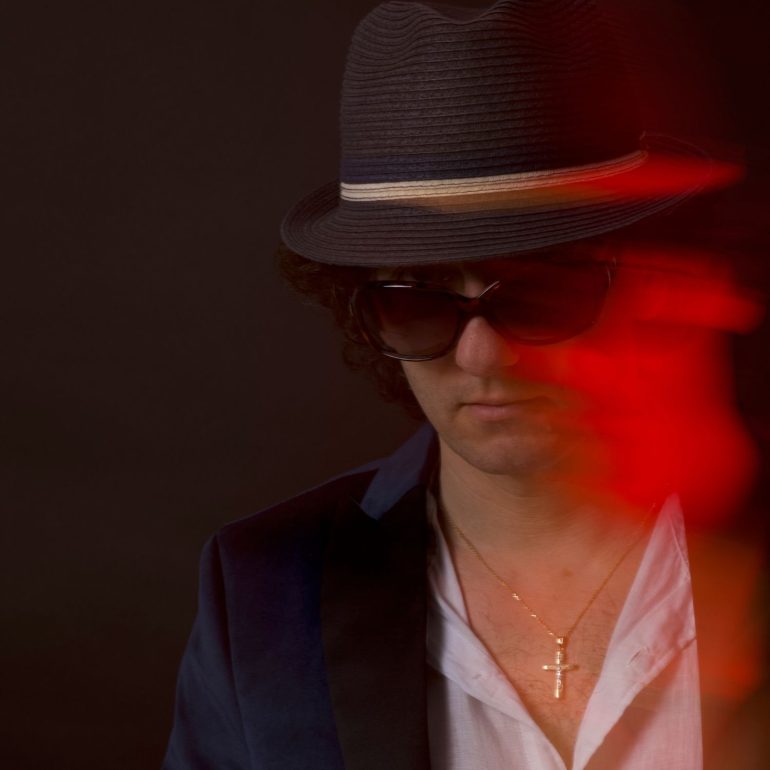
Moon Rocket is the brainchild of Raffaele Scoccia, a classically trained Italian producer, DJ and multi-instrumentalist whose Afro Melodic-Tech sound pulses at the heart of the global Afro House scene. Blending the soulful touch of piano and Hammond organ with a keen melodic instinct, he crafts tracks that brim with emotion and ignite dancefloors. His hit single, ‘Just Us Alone’, released on 12 December 2024 via Moon Rocket Music, follows the runaway success of ‘Reciprocity’, which racked up over 21 million streams and 250,000 Shazams, and was crowned Traxsource’s Best Afro House Track of 2020.
Releases on Defected, Nervous, Sony Italy, BBE, Hed Kandi and Soulfuric have cemented his reputation, while support from Black Coffee, Seth Troxler, Pete Tong on BBC Radio 1’s Essential Selection, Craig Charles on BBC Radio 6 Music, and features in Billboard, Traxsource, CLASH Magazine and Cultr have amplified his reach. From Output Brooklyn to Miami Music Week, ADE to Nikki Beach, Moon Rocket captivates fans of Black Coffee, &ME, Nitefreak and Keinemusik.
In the interview below, he opens up about his latest release and the journey that has shaped his signature sound.
What is your preferred main electronic music genre/style, and what makes you resonate with it?
My preferred styles are Afro House and Melodic Techno. I’m especially drawn to their deep, melodic, and slightly nostalgic atmosphere. I love the way they combine emotional melodies and harmonies with hypnotic rhythms, organic percussion, and a strong groove. That balance between feeling and movement is what resonates with me most, and it’s also a big part of the sound I try to express through Moon Rocket.
How many years have you been actively creating or performing electronic music?
I’ve been actively creating and performing electronic music for over 25 years. It’s been a long and rewarding journey, filled with experimentation, learning, and constant evolution. Over time, I’ve developed a deeper understanding of my sound and what I want to express as an artist, while still keeping the curiosity and passion that first drew me to electronic music.
Describe your typical studio/production workflow
My workflow usually starts with an idea. If I like it, I’ll often play it on the keyboard first, exploring the melody, chords, or overall feeling until it starts to take shape. From there, I usually build the drums and groove, then gradually add the other elements around them.
Sometimes the creative starting point is a vocal, while other times the music comes first. I don’t really follow one fixed formula; I prefer to let the initial idea guide the process. I use both hardware and software, but I’m especially drawn to instruments that give me an immediate, hands-on feeling and allow me to keep the human touch in the production.
Which major music platform generates the most engagement for your work?
I would say Spotify is where the largest part of my audience listens to my music today. It has become an important platform for reaching listeners around the world and connecting with people who discover my music through streaming. At the same time, I have to give a lot of credit to electronic music stores like Traxsource and Beatport. They played an important role in the early stages of my journey and were some of the first places where people discovered my music. I’m very grateful for that, because those platforms helped me connect with the electronic music community and build my audience over the years.
Do you prefer performing Live Sets (using hardware/controllers to manipulate sound) or DJ Sets (mixing tracks)? Why?
I really enjoy combining both. My ideal setup is a DJ set where I can mix tracks while also having my keyboard next to me, allowing me to play and improvise over the music in real time.
As a musician and piano player, I love incorporating live elements into my performances. It gives me the freedom to interact with the music and the energy of the room rather than simply playing one track after another.
So, my go-to show is really a combination of DJing and live performance, mixing tracks while adding live piano and other musical elements on top. For me, that combination creates a more personal and spontaneous experience for both myself and the audience.
What’s one underrated production skill you wish more electronic artists focused on?
For me, it would definitely be the use of live instruments and bringing a more human touch into the production. With so many possibilities available through software and technology, I think it’s easy to make everything sound too perfect or overly polished.
I love the small imperfections and natural dynamics that come from actually playing an instrument. Whether it’s piano, percussion, or another live element, I think those details can give a track more personality, emotion, and authenticity. For me, that human touch is something that can make electronic music feel more alive.
Do you see AI as a threat to musicians, a helpful collaborator, or something else? How do you plan to keep your music relevant as the industry changes rapidly because of these tools? By embracing AI, avoiding it, or taking a different approach?
I honestly think AI is a delicate and very complex subject. It’s definitely something we need to take into consideration, especially because it’s developing so rapidly and will likely become an essential tool for the next generation of musicians and producers.
I don’t necessarily see it as a threat, but I think it’s important to understand how to use it without losing the human element of music. For me, music has always been about emotion, instinct, personality, and the imperfections that come from being a musician. Those are the elements I never want to lose.
I’m open to exploring new technologies, including AI, but I think the key is to use them as tools rather than letting them define your artistic identity. As the industry continues to change, I want to keep trusting my instincts, staying curious, and evolving while remaining true to my own sound. Ultimately, I believe that authenticity and a genuine human connection with the music will always matter.
If you are a producer, how often do you utilize generative AI tools (e.g., for mastering, sample generation, synth patching, etc.) in your current process?
I started using AI for Mastering and I tested Suno as an help to see if I could find more options on a creation of mine, but honestly I’m still very connected to a hands-on approach, especially when it comes to playing instruments, creating melodies, developing chords, and shaping the emotional character of a track.
I’m certainly interested in understanding how these tools can be used, and I think they will become increasingly relevant in music production. But for now, I prefer to rely on my own musical instincts and the human element of playing and producing.
What is the single biggest challenge facing electronic music artists in the next 5 years?
For sure, I think AI is going to change the landscape of electronic music completely. Everything is moving so fast, and in order to keep up with that pace, there’s a risk of delegating more and more of the creative process to technology.
At the same time, I think one of the biggest challenges will be maintaining a sense of individuality. When technology can help you create music faster and more easily, it can also become harder to develop a truly recognizable sound and make people feel your personality through the music. I would say that AI can be dangerous too, because there’s a risk of losing your personality and, consequently, creating something that feels meaningless. That’s definitely a trap you don’t want to fall into.
For younger artists in particular, I think it’s crucial to spend time exploring who you are as a musician and developing your own sound before relying too heavily on technology. Learn your instruments, experiment, make mistakes, and discover what comes naturally to you. Technology will always be there, but developing your own artistic identity takes time and I think that will become more valuable than ever.
How would you describe your creative process when a new beat or synth line first clicks?
It’s a very fascinating process because, honestly, you never really know where that moment comes from. Sometimes a beat, a chord, or a synth line just clicks, and suddenly you feel that something special is there. To me, it almost feels like a miracle, you can’t really explain why it happens, you just recognize it when it does.
When that happens, I try not to overthink it. I appreciate the idea and the feeling it gives me, and then I start following it, playing around with it and seeing where it can take me. Sometimes it develops into a full track, and sometimes it doesn’t, but I think the important thing is to recognize those moments of inspiration and give them the space to grow.
What’s the toughest technical or industry obstacle you’ve faced as an electronic artist?
I think one of the toughest challenges is making your voice heard. Once you release a track, you never really know how people will react to it or how it will perform. There are so many artists, platforms, genres, and ways for people to discover music today that the landscape has become incredibly fragmented.
You can spend months creating a track you truly believe in, but once it’s released, its journey is largely out of your hands. You don’t know who will discover it, how it will be received, or whether it will reach the audience you had in mind or not.
For me, that makes it even more important to stay focused on developing your own sound and personality rather than chasing every trend. You can’t control how a track will perform, but you can control the music you create and make sure it genuinely represents who you are as an artist.
How has growing success or attention changed the way you produce, perform, or share your music?
Honestly, growing success hasn’t really changed the way I produce or approach my music. I still try to follow my instincts and make music that feels authentic to me as I’ve always done from the beginning.
What has changed is my awareness of the size of the audience listening to my music. Knowing that more people are following what I do definitely gives me an extra sense of responsibility. I want to keep pushing myself and give my best with every release, because I don’t want to disappoint the people who have chosen to follow my journey.
At the same time, I think it’s important not to let that pressure influence the creative process too much. I still believe that the best way to connect with people is to stay true to yourself and let the music come naturally.
What’s your current favorite piece of electronic gear or plugin that you can’t stop playing with in the studio?
It’s difficult to choose just one because I tend to move between different instruments depending on what I’m working on. My Nord Electro keyboard and Novation Bass Station are definitely among my favorites, and I use Serum quite a lot as well.
But I have to mention my upright piano, even though it’s obviously not electronic gear. It’s still one of the most important instruments in my studio and probably the one I feel most naturally connected to. I’ve been playing piano for most of my life, so whenever I need to find a melody, chord progression, or simply get into the right creative mood, I always come back to it.
If you could change one thing about the modern music industry overnight, what would it be?
If I could change one thing, it would be the pressure on artists to wear too many different hats. Today, an artist is often expected to be the producer, songwriter, promoter, social media manager, live performer, mixing and mastering engineer, and sometimes even the person handling the business side of everything.
Of course, being able to understand and manage different aspects of your career can be very valuable, but I don’t think one person can realistically be an expert at all of these things at the same time. Music is a very complex process, and each role requires a different set of skills, experience, and focus.
Ideally, I think those responsibilities should be shared with the right people around the artist, allowing everyone to focus on what they do best. Unfortunately, that’s not always possible, especially for independent artists, so you often end up doing everything yourself. But I believe that having a strong team and giving each part of the process the attention it deserves can ultimately lead to better music and a healthier, more sustainable career.
Listen to ‘Just Us Alone‘:
Follow ARTIST:
Website – Instagram – Facebook – Soundcloud – Youtube – Spotify