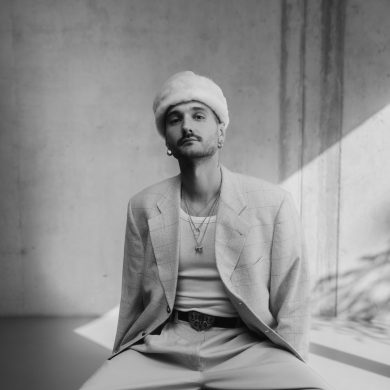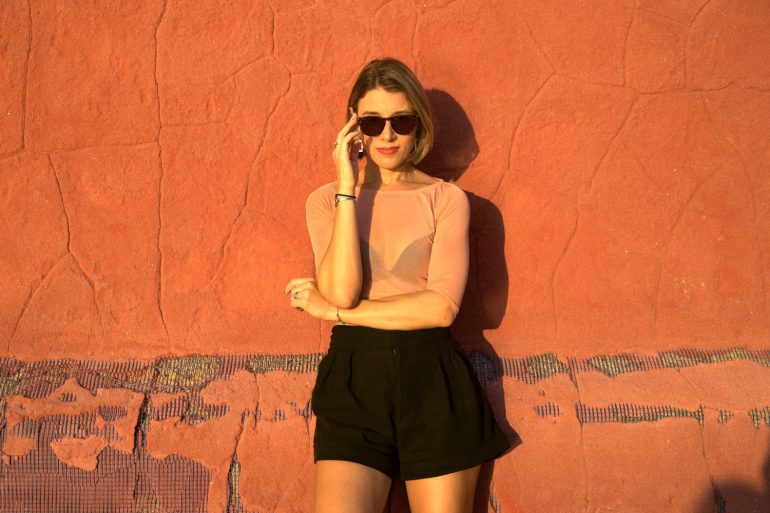
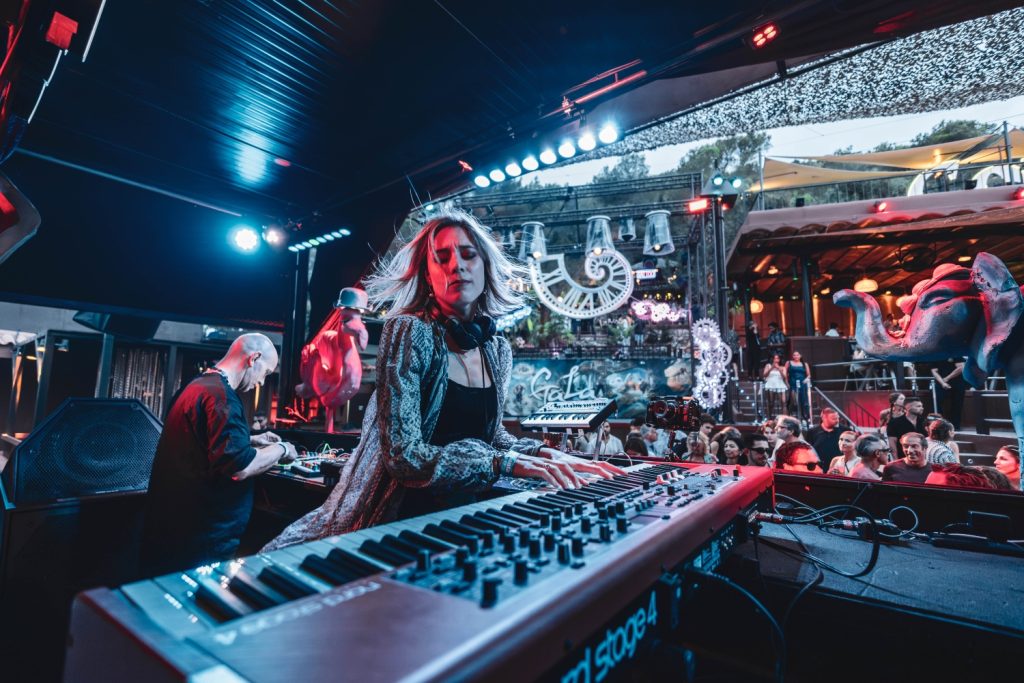
French-Brazilian producer, pianist, and live electronic artist Ella Romand channels her classical training and Brazilian roots into a distinctive fusion of Deep, Organic, Afro, and Melodic House. Based in Miami, she crafts a sound defined by expressive live keys, textured synthesisers, and organic rhythms, a signature that has propelled her from local acclaim to international recognition. Romand’s ascent began with a win at Electric Pickle’s mix competition and a residency at Do Not Sit On The Furniture, leading to performances at major festivals including Ultra Music Festival, SXM Festival, Lightning In A Bottle, Cityfox Live, III Points, and Burning Man. She has appeared at renowned venues such as Brooklyn Mirage, Superior Ingredients, Vagalume in Tulum, The Great Northern, and Cova Santa in Ibiza, sharing stages with Nora En Pure, Bob Moses, Sébastien Léger, Lee Burridge, Francis Mercier, Rodriguez Jr., Eli & Fur, Nick Warren, Damian Lazarus, and WhoMadeWho. Romand’s collaborative work with the New World Symphony, performing alongside more than 80 musicians, and her releases on labels like Manual Music, Go Deeva, Minds Alike, Redolent, and Husa Sounds, together with her Ellaments platform amassing over 500,000 plays, reflect her growing influence within the global electronic scene.
With her vibrant, dancefloor-ready remix of Husa & Zeyada’s ‘More Love’, Romand introduces grooving Moog basslines and crisp house piano chords to the track’s hypnotic indie-electronic core. This release signals her continued evolution as both a producer and live performer.
In this exclusive interview, Romand discusses the creative process behind her latest remix, her progression from classical piano to international stages, and the vision shaping her music and community-driven initiatives.
What is your Primary Role(s) in Electronic Music? For Example, are you a DJ, vocalist, producer etc.
Hi! I’m primarily a music producer & live act, and a pianist at heart 🙂
What is your preferred main electronic music genre/style, and what makes you resonate with it?
Electronic music as a genre has become so wide that it’s hard to choose, but I like everything from Organic to Afro house, Indie Dance to Melodic Techno – it all depends on what makes you groove and catches your ear.
How many years have you been actively creating or performing electronic music?
I’ve been composing for quite some time, but in electronic music, it’s been 13+ years.
Describe your typical studio/production workflow (e.g., hardware vs. software focus, favorite gear, creative starting point).
As a “keys person” at heart, most of my tracks start at the piano. A chord progression or a melody usually comes first, then I build the groove around it in Ableton. Most of my productions include the Mini V3 from Arturia, and most recently the Korg Minilogue XD synth, which is also part of my live setup. I also like to use sounds from the Nord Stage keyboard, as well as the Keyscape VST from Spectrasonics for piano sounds.
I enjoy creating layers and textures with melodies, and I try to make it as unique as possible, like creating my own arpeggios or recording my own shaker to give each track a distinct sound.
Which major music platform (Spotify, Apple Music, Bandcamp, Soundcloud, etc.) generates the most engagement for your work?
SoundCloud is normally the one with the most engagement, since it’s the one I have had the longest, and it’s where I also release my radio show Ellaments on a biweekly basis.
Do you prefer performing Live Sets (using hardware/controllers to manipulate sound) or DJ Sets (mixing tracks)? Why?
Despite being quite complex, live sets can add a lot more personality and uniqueness to the performance. It also increases the chances for something to go wrong, but I take my chances!
What’s one underrated production skill you wish more electronic artists focused on?
Listening before working again on a session. And giving your ears a break! I like to start a session by listening and taking notes before I touch anything, so my ears are fresh with the entirety of the song. It also gives me a better perspective on what is working and what isn’t. Stepping outside the studio for a few minutes every hour or so to reset my ears is also essential to make a session more productive.
Do you see AI as a threat to musicians, a helpful collaborator, or something else? How do you plan to keep your music relevant as the industry changes rapidly because of these tools? By embracing AI, avoiding it, or taking a different approach?
It’s a delicate topic. There is A LOT of regulation that needs to be implemented ASAP, and thousands, if not millions of tracks, are being made without proper identification that is AI made, or attribution to the “inspiration” the AI tool is borrowing from. While some tools are great for speeding up certain parts of the process, they take a lot away from the creative input a producer would normally bring.
While I think embracing it will be inevitable, I also believe there will be proper ways to use it, keeping control of the creative process and minimizing the machine’s input, to honor human expression and emotion.
If you are a producer, how often do you utilize generative AI tools (e.g., for mastering, sample generation, synth patching, etc.) in your current process?
I honestly haven’t really used it for anything other than stem separation, enhancing my vocals for a demo before recording a real singer, or testing the mixing (which wasn’t anything impressive) as I enjoy the process of making music.
What is the single biggest challenge facing electronic music artists in the next 5 years?
Being authentic and having a music style that can stand out in the sea of content and among the millions of releases. Live experiences and authentic connection will be key.
How would you describe your creative process when a new beat or synth line first clicks?
It’s not too different than my regular process, to be honest. I keep building around it but also try not to overthink and honor the initial idea. I also always record when something is flowing, even if it’s a sketch, so the original idea is there.
What’s the toughest technical or industry obstacle you’ve faced as an electronic artist?
Being a female and touring alone can be challenging, especially in countries or cultures that are still male dominated. Recently I went to play in a country in the Middle East, and the driver was shocked to know I was traveling alone, and asked some uncomfortable questions.
There was also a time I went to play at a festival, and the keyboard provided had the wrong plug and voltage! The team managed to get a transformer, but they only realized the keyboard itself was the problem as we were heading to the venue. I didn’t have time to do a sound check, but we did get a working keyboard just minutes before my set started.
How has growing success or attention changed the way you produce, perform, or share your music?
I don’t think it has changed much, but I am thankful to now have a small (but mighty) team that helps me with some of the behind the scenes work, like planning for a release or strategizing the next steps. As for performance, I feel blessed to travel to places I have never imagined to share my music, and lucky to meet and play with so many great artists, and even collaborate with some of them in the studio. More on that very soon 🙂
What’s your current favorite piece of electronic gear or plugin that you can’t stop playing with in the studio?
My new Minilogue XD from Korg! Oh, and I also love experimenting with the Valhalla reverbs on different instruments to see the effects I can get.
If you could change one thing about the modern music industry overnight, what would it be?
The weight placed on an artist’s social media, instead of how their music is perceived, felt and heard. Social media is helpful and does have its benefits, but the weight it has had in recent years is disproportionate compared to what an artist should be considered.
What’s one unexpected influence, maybe from outside music, that keeps showing up in your work?
Hm, I think it’s probably the music I grew up listening to, from Classical Music to Bossa Nova, and even progressive elements I would hear in electronic music when I first became a fan, which might be heard in my chord progressions or melodic buildups.
Stream Husa & Zeyada – ‘More Love’ (Ella Romand Remix):
Purchase on Beatport: HERE
Follow Ella Romand:
Spotify – Beatport – Traxsource – Instagram